Key takeaways
- Compare the best dip belts for weighted pull-ups, dips and belt squats, with chain and strap designs, padded backs and heavy-duty builds compared.
Once bodyweight dips and pull-ups become easy, progress stalls unless load increases. A dip belt is the simplest way to add it: a padded belt around the hips with a chain or strap that hangs plates between the legs, keeping hands free and the weight centered. It turns a dip station or pull-up bar into a progressive strength tool.
The designs differ more than they first appear, varying in padding, chain length, attachment style, and rated capacity. This guide compares five current options, from a classic polypropylene belt to a modern multi-anchor design that doubles as a sled and squat harness.
As an Amazon Associate, we earn from qualifying purchases.
Quick answer
The Gymreapers Dip Belt is the best pick for most lifters: a contoured, padded belt with a long heavy-duty steel chain and hardware rated for serious loads, suited to weighted dips and pull-ups alike. Traditionalists should look at the Harbinger 28900, while the Iron Bull Strength Advanced Dip Belt V2 suits lifters who also want belt squats and sled work from one belt.
Harbinger 28900 Polypropylene Dip Belt with 30-Inch Steel Chain, Black

The Harbinger 28900 is the classic dip belt, a design that has hung in commercial gyms for decades. The belt itself is woven polypropylene, a stiff, hard-wearing material that holds its shape under load without stretching, and the contoured back panel spreads pressure across the hips and lower back. A 30-inch steel chain threads through the front rings and clips to itself with carabiner-style hooks, letting plates hang freely between the legs.
There are no buckles to adjust and no sizing chart to study; the belt wraps, the chain clips, and training starts. The 30-inch chain gives enough length for standard plates, and the polypropylene shrugs off sweat and chalk.
The trade-offs reflect its old-school nature. Polypropylene is less forgiving on the hips than padded neoprene, especially as loads climb, and the fixed chain length cannot be extended for deep belt squats or tall dip stations. Lifters who bruise easily under heavy plates may want more cushioning. For straightforward weighted dips and pull-ups at moderate loads, though, the 28900 remains a proven, durable tool.
Gymreapers Dip Belt With Chain For Weightlifting, Pull Ups, Dips – Heavy Duty Steel Chain For Added Weight Training

The Gymreapers Dip Belt is built for lifters who intend to load the belt heavily and often. The belt body uses padded, contoured construction that sits securely on the hips, and the heavy-duty steel chain runs a generous 38 inches, which gives plates room to hang clear of the legs on dips and lets taller lifters set up comfortably on pull-ups. The brand rates the belt for loads up to 300 pounds, a figure that covers far more than most lifters will ever hang.
Details suit serious training. The chain attaches with sturdy carabiners that are quick to clip between sets, the stitching is reinforced at the stress points, and the belt’s profile is wide enough at the back to distribute heavy loads without digging in.
Trade-offs are modest. The long chain can feel excessive for shorter lifters, who may need to loop it shorter, and the padded build is warmer than a bare polypropylene belt during long sessions. It also costs more than entry-level belts. For lifters progressing toward genuinely heavy weighted work, this is the most complete traditional dip belt in the roundup.
ROGZO Weighted Dip Belt With 36″ Heavy Duty Steel Chain – Best Double Stitched Neoprene Dipping Pull Up, Chin Up Belt (Neon Green)
The ROGZO Weighted Dip Belt takes the neoprene route, wrapping the hips in a soft, flexible belt with double stitching throughout for durability. Neoprene’s advantage is comfort: it cushions the hip bones and lower back, conforms to the body rather than holding a rigid shape, and stays comfortable through high-rep weighted work where stiffer belts start to bite. The 36-inch heavy-duty steel chain provides generous hanging length for plates of all sizes.
The belt fastens securely and the chain clips on with carabiners, keeping setup quick between sets. The Neon Green colorway is easy to spot in a shared gym, which reduces the odds of the belt walking away in someone else’s bag. The flexible body packs down smaller than rigid belts for travel.
Trade-offs: neoprene retains heat and can feel warm during long sessions, and over years of very heavy use, soft belts generally show wear at the chain attachment points sooner than overbuilt designs. The bright color will not suit everyone, though the design is the point for buyers who like visible gear. As a comfort-first belt for regular weighted training, it is a strong option.
RIMSports Premium Dip Belt with Chain – Weight Belt with Chain for Weightlifting, Pullups and Dips, High Comfort Neoprene Padded Weight Lifting Weighted Belt with Longer Heavy Duty Steel Chain
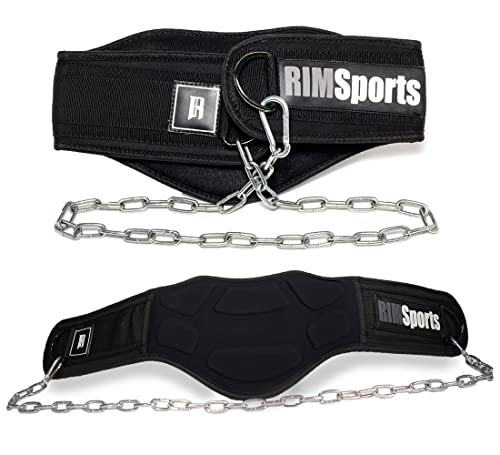
The RIMSports Premium Dip Belt stands out for doubling as a supportive lifting belt. Its thick neoprene padding and wide back panel provide enough structure that many lifters use it for general support work as well as weighted dips and pull-ups, which makes it a space-saver in a small home gym. The longer heavy-duty steel chain, around 34 inches, hangs plates comfortably and clips on with carabiners at both ends.
Comfort is the headline feature. The padding spreads load across the hips more evenly than thin belts, which matters during long sets of weighted dips where the chain’s pull concentrates pressure. The belt adjusts to fit a wide range of waist sizes, and the materials handle sweat well, wiping clean after sessions.
Trade-offs follow from the hybrid design. A belt that also works as a lifting belt is slightly bulkier than a pure dip belt, and dedicated lifters who already own a good lifting belt may not need the overlap. The neoprene construction shares the usual warmth of the material. For lifters who value comfort and versatility in a single belt, the RIMSports is an appealing middle ground between basic and premium.
Iron Bull Strength Advanced Dip Belt V2 – Heavy-Duty Weighted Belt with Reinforced Back, Chain & Nylon Strap – 3-Point Anchor D-Rings for Dips, Pull-Ups, Squats & More
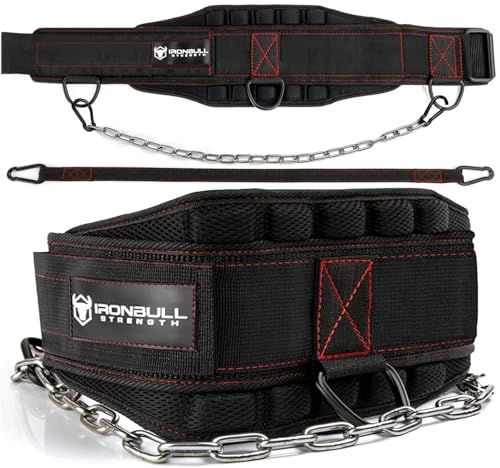
The Iron Bull Strength Advanced Dip Belt V2 rethinks what a dip belt can do. Built from heavy-duty nylon with a reinforced back panel, it uses three anchor D-rings rather than a single front attachment, and it ships with both a steel chain and a nylon strap. That combination opens up far more than dips and pull-ups: the belt works for belt squats, sled pulls, and weighted carries, functioning as a small harness system rather than a single-exercise tool.
For standard weighted work it behaves like a premium dip belt, with the strap option hanging plates more quietly and smoothly than a chain, which some lifters prefer for pull-ups. The nylon construction is light, flexible, and resistant to the sweat and abrasion that age other materials. Sizing is specific, and the brand is explicit that buyers should follow its size chart rather than ordering by pants size.
Trade-offs: the versatility costs more than a basic chain belt, and lifters who only ever do dips and pull-ups pay for anchors they will never use. The strap also has a different hang feel than a chain, which traditionalists may not love. As a multi-purpose loading belt for a growing home gym, it is the most capable design here.
How to choose
Start with load. Check the belt’s rated capacity and be honest about how much weight you will realistically hang within the next year. Hardware quality — chain thickness, carabiner strength, and stitching at the attachment points — matters more than belt material once loads get heavy.
Chain length comes next. Thirty inches suits most dips and pull-ups. Longer chains, 36 inches and up, help taller lifters, deep dip stations, and belt squats. A strap attachment hangs plates quietly and smoothly, while a chain is simpler and nearly indestructible.
Comfort decides whether the belt gets used. Padded neoprene and contoured backs protect hips during long sessions; stiff polypropylene is cooler and tougher but less forgiving. If possible, match belt width and padding to your frame.
Finally, consider scope. A pure dip belt is the cheapest route to weighted dips and pull-ups. A multi-anchor belt costs more but can replace a sled harness and belt-squat setup, which is real value in a compact home gym. Check sizing charts carefully at the premium end.
Who should skip
Skip a dip belt if you cannot yet perform clean, full-range bodyweight dips and pull-ups for solid sets, because adding load to a shaky base invites shoulder and elbow trouble; build the base first. Lifters with current hip, lower-back, or shoulder issues should get professional clearance before hanging weight from the waist. Gym members whose facility provides shared dip belts also gain little from owning one. And if your weighted work is mostly vest-friendly movements like push-ups and step-ups, a weight vest may serve you better.
FAQ
How much weight can a dip belt hold?
It depends on the model. Traditional chain belts in this guide are built for loads from roughly one hundred pounds to around three hundred pounds at the top end. The chain, carabiners, and stitching are the limiting parts, not the belt fabric. Stay within the maker’s rating, inspect hardware regularly, and retire any belt with frayed stitching or a bent clip.
Is a chain or a strap better on a dip belt?
Chains are simple, durable, and let plates hang and swing naturally, which most lifters are used to. Straps hang plates more quietly and sit flatter, which some prefer for pull-ups and belt squats. Neither is objectively better; the choice is about feel and noise. Belts that include both, like the Iron Bull Strength V2, remove the need to decide.
Can I do belt squats with a dip belt?
Yes, with the right setup. Belt squats need enough chain or strap length for the plates to hang below the platform without touching down early, plus a stable elevated stance. Longer-chain belts handle this best. Multi-anchor belts are designed with belt squats in mind, while short-chain traditional belts can run out of length on taller setups.
How should a dip belt fit?
The belt should sit snugly on the hips, with the padded back panel centered on the lower back and no sliding when plates are loaded. It should not ride up into the ribs or slip down under weight. Premium belts come in sizes, so measure your waist at the belt line and follow the brand’s chart rather than guessing from clothing sizes.
Final verdict
The Gymreapers Dip Belt is the roundup’s top recommendation for serious weighted dips and pull-ups, thanks to its long chain, strong hardware, and comfortable padded build. The Harbinger 28900 remains the durable classic, the ROGZO and RIMSports belts prioritize neoprene comfort, and the Iron Bull Strength Advanced Dip Belt V2 is the choice for lifters who want one belt for dips, belt squats, and sled work. Match capacity and chain length to your training, and any of these five will add years of progress to bodyweight staples.