Key takeaways
- Compare the best parallettes for push-ups, dips, L-sits and handstands, with wooden and steel picks in low and tall heights for calisthenics at home.
Parallettes are the simplest upgrade in bodyweight training: two low bars that lift your hands off the floor, taking pressure off your wrists, deepening your push-ups, and unlocking L-sits, tuck holds and handstand work that are awkward on flat ground.
The five sets here span the main styles: compact wooden push-up parallettes, all-steel bars for heavy use, beech wood bars with joint-friendly thick grips, tall parallettes with real clearance for dips and L-sits, and a versatile mid-height steel set. Every pick is a current listing from an established brand.
Below you will find what each set does well, where it falls short, and who it suits, plus guidance on height and grip material.
As an Amazon Associate, we earn from qualifying purchases.
Quick answer
For most people, the WoodPower PowerBars are the best parallettes to start with: the thick beech wood grips are kind to wrists and hands, and the low profile suits push-ups, L-sits and handstands. Taller athletes who want dips and full L-sit clearance should choose the Dolibest 12 inch parallettes instead.
PULLUP & DIP Parallettes – Push Up Handles with Ergonomic Wooden Handles & Heavy-Duty Steel – Non-slip Parallettes Bars for Strength Training and Calisthenics – Press Up Handles for Push Ups
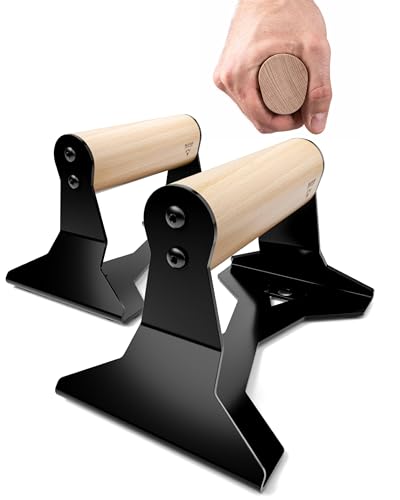
The Pullup and Dip parallettes pair short beech wood handles with heavy-duty steel feet, and they are best understood as premium push-up bars with parallette ambitions. The wooden grip is shaped ergonomically rather than turned as a plain cylinder, so it fills the palm and keeps the wrist neutral during push-ups, mountain climbers and handstand holds. At roughly five inches tall, they are low parallettes: enough clearance for deeper push-ups and tuck holds, and a stable height for learning handstand balance against a wall.
The steel base gives each bar a planted feel, non-slip pads protect floors, and the maker rates the pair for loads up to 200 kilograms. The compact footprint is the real selling point: the set stores in a drawer and travels in a gym bag.
The trade-off is height: full L-sits and proper dips need more clearance than these provide, especially for taller users, and they are sold at a premium for their size. If your training centers on push-up variations and handstand skill work in a small space, they are an excellent fit; if dips are a priority, look at the taller sets below.
Yes4All Calisthenics Wood/Solid Steel Parallettes, Bars for Fitness, Push Up & Dip-Heavy Duty Non-Slip Dip Station Stand-Handstands, Sturdy Gymnastics Bars, Strength Training Parallel Bars

Yes4All takes the heavy-duty route with parallettes built from solid steel. The grip bars use a 1.5 inch diameter, thicker than standard push-up handles, which spreads pressure across the palm for support holds, dips and handstand work. The steel construction makes the set effectively indifferent to body weight, and the wide feet with non-slip caps keep the bars steady on wood, tile and rubber flooring.
Choose this set if your training includes weighted dips or you want equipment that feels indestructible. The added height over mini push-up bars gives clearance for L-sit practice and full-range dips for most users, and the powder-coated finish shrugs off chalk and sweat. A wood bar version is also available for lifters who prefer a warmer grip.
Steel has downsides. It is colder and harder on the palms than wood during long support holds, and it can feel unforgiving while you are learning handstands. The set is also heavier to move around than wooden parallettes, though for a fixed home gym corner that hardly matters. For durability per dollar, this is the strongest option in the guide.
WOODPOWER – PowerBars, Wooden Parallettes Push Up Bars, Joint-Friendly Beech Wood Calisthenics Equipment for Home, Durable Handstand Trainer Push Up Handles for Floors (Classic)

The WoodPower PowerBars are built around one idea: the grip should fit the human hand. Each bar is a single piece of beech wood with a thick diameter that lets your fingers wrap naturally and keeps the wrist neutral, reducing the joint strain thin steel handles can cause during push-ups, L-sits and handstands. Wood also warms to your hand, absorbs a little sweat, and grips securely without chalk.
The Classic set sits about four inches off the floor, a low profile aimed at push-up depth, tuck work, floating holds and handstand training. The bars are handmade in Europe with a wide, stable base that resists tipping when you kick up into a handstand, and the finish is smooth yet grippy. WoodPower also sells a taller XL version with roughly double the height.
The compromises are price and care: these cost more than basic steel sets, and like all wooden equipment they prefer indoor storage over a damp garage. The low Classic height also limits true dips. For hand health and feel, though, these are the pair most people enjoy using daily.
Dolibest Push Up Bar, 12” High Parallettes Bars with Wooden Handles, Stable and Comfortable Calisthenics Equipment, Suitable for Handstand, L-Sit, Dip Bar, Strength Training for Indoor Outdoor Use

Height is the headline here. At 12 inches tall and 20 inches long, these parallettes offer the clearance that low mini bars cannot: room for full L-sits without heels brushing the floor, proper dips with a full range of motion, and swing-throughs for gymnastics-style training. The design pairs wooden handles with a steel frame, combining a hand-friendly grip with a rigid structure that does not flex under load.
The wooden bar is comfortable for long support holds and handstand practice, and the wide base keeps the set stable. For taller athletes, this is often the first height that makes L-sit progressions feel fair rather than cramped, and the length gives your hands room to adjust for different grips.
There are trade-offs to accept. A tall, long set takes up real floor space and does not pack into a bag the way mini parallettes do. Tall bars also demand more control during handstands, since a bail covers more distance, so beginners should learn kick-ups against a wall first. If your program includes dips and L-sits as staples rather than extras, the clearance is worth the footprint.
AmazeFan Parallettes Bars, High Steel Push Up Bar Strength Training For Handstands, Calisthenics Bars & Dip Bars, Calisthenic, Push Up Stands Handle for Floor Workouts Calisthenics Equipment

The AmazeFan parallettes sit mid-range at about 10 inches tall, with a footprint around 17 inches long. That middle ground is genuinely useful: clearance for L-sits, dips and V-sits, while staying low enough to feel manageable for handstand practice. The frame is steel throughout, with a simple welded design that keeps the cost sensible and the structure rigid.
For home calisthenics, the appeal is versatility. One set covers push-up variations, support holds, dip work and early planche progressions like tuck holds, and the steel frame tolerates being knocked around in a garage gym. The feet are capped to protect floors, and the bars are light enough to move aside between exercises but heavy enough not to wander during sets. The pair also stacks neatly in a corner between sessions.
The compromises are the usual ones for steel at this size. The bare steel grip is less forgiving on the palms than wood during long sessions, and there is no padding, so gymnastic grips or chalk help for high-volume work. The finish and welds are functional rather than refined. As an all-purpose training tool, it does its job well.
How to choose
Height is the first decision, because it defines what you can train. Low parallettes around four to five inches suit push-ups, handstand balance work and travel. Medium bars around ten inches add comfortable L-sits and dips for most body types. Tall bars around twelve inches give full clearance, especially for taller athletes, at the cost of stability and storage space.
Grip material comes next. Wood is warmer, kinder to wrists and palms, and grips better with sweaty hands, but costs more and prefers indoor care. Steel is cheaper, stronger and maintenance free, but feels cold and hard during long holds. Diameter matters too: thicker bars around 1.5 inches spread pressure and suit bigger hands.
Finally, check stability and capacity: wide feet, non-slip caps and a rating comfortably above your body weight, especially for weighted dips. Buy for the skills you are training now, not the planche you hope to attempt in two years.
Who should skip
If your wrists are currently injured, parallettes are not a shortcut around medical advice: get the joint checked first, because support holds load the wrist even in a neutral position. Beginners who cannot yet hold a solid plank or do floor push-ups with good form will get more from basic floor work first.
Gymnasts and advanced athletes training on full-size parallel bars or rings should also skip home parallettes, since short bars limit swing elements and grip changes. And if your only goal is deeper push-ups, simple push-up handles cost less and do that single job just as well.
FAQ
What height parallettes should a beginner buy?
A low or medium set is the best starting point. Bars around four to ten inches high cover push-ups, support holds, tuck sits and early L-sit progressions, and feel less intimidating for handstand practice. Move to twelve inch bars later if you add full dips, or if you are tall and your heels touch the floor during L-sits.
Are wooden or steel parallettes better?
Neither is universally better. Wood feels warmer, grips well with bare hands and is gentler on wrists and palms, which is why many calisthenics coaches prefer it. Steel is stronger, cheaper and needs no care, making it the practical choice for weighted dips and garage gyms. Choose based on your main exercises.
Do parallettes help with wrist pain during push-ups?
They often do, because gripping a bar keeps the wrist in a neutral, straight position instead of bent back at ninety degrees on the floor, reducing the stretch and compression that aggravate many wrists. They are not a cure for injury, though: if pain is sharp, new or persistent, get the wrist examined rather than training around it.
Can I do dips on parallettes?
Yes, as long as the bars are tall and stable enough. You need clearance so your feet or bent knees do not hit the floor at the bottom, which usually means bars around ten to twelve inches for most adults. Keep the bars close enough together for comfortable shoulders, and start with partial range until you adapt.
Final verdict
Choose the WoodPower PowerBars for the best grip feel in daily training. Pick the Yes4All steel set for durability, the Dolibest bars for tall clearance and real dips, the Pullup and Dip set for a compact premium option, and the AmazeFan bars for a versatile mid-height all-rounder.