Key takeaways
- Compare the best water rowers for home gyms, from handcrafted WaterRower wood frames to foldable budget models, with advice on tanks, monitors and storage.
- Top Pick: WaterRower Natural Rowing Machine in Ash Wood with S4 Monitor
- Runner-up: WaterRower Club Rowing Machine with S4 Monitor
- Also consider: WaterRower Oak Rowing Machine with S4 Monitor
Water rowers use a paddle spinning inside a sealed tank, so resistance builds smoothly with stroke power and produces the swishing sound that makes the category feel close to rowing on a lake. Unlike air rowers, the resistance is self-pacing with no damper to set, and unlike magnetic models, the catch feels fluid rather than mechanical. Most water rowers also use wooden rails, which makes them quieter and better looking in a living space. This guide compares five machines sold on Amazon, from the original WaterRower hardwood models to foldable designs from Yosuda and Joroto that cost far less, and covers the tank, rail and monitor details that separate them.
As an Amazon Associate, we earn from qualifying purchases.
Quick answer
The WaterRower Natural in ash is the classic pick, with a handcrafted frame, smooth dual-rail action and the S4 monitor. The WaterRower Club and Oak models vary the finish and monitor features. For a much lower commitment, the Yosuda water rower folds for storage and supports up to 400 pounds, while the Joroto MR280PRO offers a solid oak foldable frame with a Bluetooth monitor.
WaterRower Natural Rowing Machine in Ash Wood with S4 Monitor
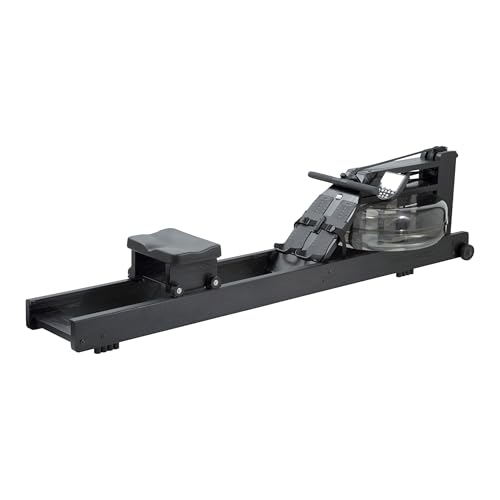
The Natural is the original WaterRower design, handcrafted in the United States from solid ash with a honey oak stain and danish oil finish. Its water tank uses a dual-paddle clutch that engages instantly at the catch, so resistance feels even through the drive and rises naturally with effort. The dual-rail seat track keeps the saddle stable, and the machine stores upright against a wall, taking roughly two square feet of floor when parked. The S4 monitor tracks time, distance, stroke rate, intensity and heart rate with an optional strap, and connects to a computer for rowing software. Ash absorbs vibration well, which keeps the machine quiet on hard floors. User capacity and rail length suit most adults, and the wooden frame doubles as furniture in a living room. The main considerations are the premium position in this guide and basic water care: purification tablets keep the tank clear. For buyers who want the reference water rowing experience and a machine built to last for many years, the Natural remains the standard.
WaterRower Club Rowing Machine with S4 Monitor
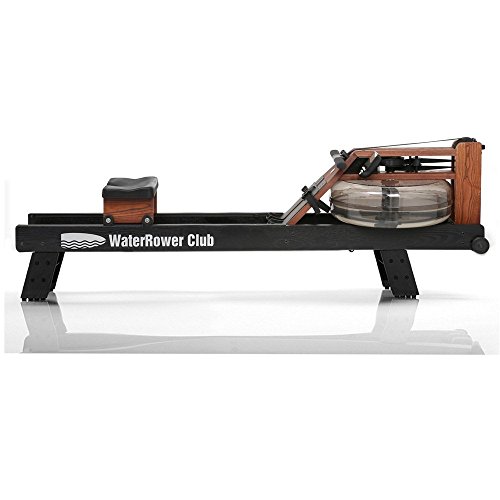
The Club model shares the same tank, dual-rail layout and rowing feel as the Natural, but is finished in a darker stained ash with black rails, a look originally aimed at studios and shared spaces. The darker finish hides scuffs and wear better than the lighter Natural, which matters in households where the machine lives in a busy room or is used by several people daily. Current listings pair it with the S4 monitor in its Bluetooth-enabled version, making app and computer connections simpler than on older units. The frame is the same handcrafted ash construction, stores upright the same way, and uses the same purification tablet routine for the tank. Resistance, seat comfort and stroke mechanics are effectively identical to the Natural, so the decision between them is mostly finish, monitor version and availability. Buyers furnishing a home gym with darker equipment, or planning heavy shared use where a forgiving finish helps, will prefer the Club. Those wanting the classic light-wood look should choose the Natural or the Oak model below.
WaterRower Oak Rowing Machine with S4 Monitor

The Oak version builds the same WaterRower platform from solid oak instead of ash, giving the frame a denser feel and a richer grain pattern. Oak is heavier and harder than ash, which slightly changes the machine’s presence in the room: it feels planted, looks like fine furniture, and suits homes where the rower stays visible rather than stored away. Everything else follows the family formula: the dual-paddle water tank, dual-rail seat, upright storage and the S4 performance monitor with Bluetooth on current listings. The listed user capacity is 300 pounds, and the rail length fits tall rowers comfortably. Water care is the same occasional purification tablet, and the tank is sealed against leaks under normal use. The Oak model typically sits at the top of the WaterRower price range in this guide, so it is a deliberate furniture-grade purchase rather than a value play. For buyers who want the WaterRower stroke with the most premium wood finish, and who plan to keep the machine as a permanent part of the room, the Oak is the flagship choice.
Yosuda Water Rowing Machine for Home Use, Foldable Wooden Rower

The Yosuda water rower brings the category to a much lower commitment by using a beech wood frame that folds rather than standing upright as a single rigid rail. Its tank holds about 22 liters and uses a multi-blade paddle for smooth, immersive resistance, and the listed user capacity is a generous 400 pounds, the highest in this guide. A dedicated monitor tracks the standard metrics and connects by Bluetooth to training apps, and the seat is a contoured cushion designed for longer rows. The folding design matters in apartments: the rail lifts so the machine takes a fraction of its working length, and transport wheels help move it. The frame includes a water maintenance kit in the box. Trade-offs versus the WaterRower models include lighter-duty hardware, a less refined monitor, and a shorter track record for the brand. For buyers who want genuine water resistance and a wooden frame without the premium outlay, and who need storage flexibility more than heirloom construction, the Yosuda is the practical entry point into water rowing.
Joroto MR280PRO Water Rowing Machine
The MR280PRO is Joroto’s foldable water rower, built from solid oak and rated for users up to 330 pounds. The frame folds for storage like the Yosuda, and the water tank delivers the same self-pacing resistance, with the level adjusted by how much water is in the tank. A Bluetooth monitor tracks workout data and pairs with apps and a tablet holder keeps a screen at eye level for guided rows or entertainment. The oak construction gives it a sturdier, more furniture-like feel than many budget rowers, and the wide seat and footplates with adjustable straps suit a range of body sizes. Joroto is better known for its magnetic rowers and exercise bikes, and this model applies the same value approach to water rowing. Assembly is a typical two-box home setup. Compared with the Yosuda, the MR280PRO offers oak instead of beech and a slightly lower capacity, at a similar position in the range. Buyers comparing the two foldable options should decide on wood preference, capacity needs and which monitor ecosystem they prefer.
How to choose
Start with the frame and storage plan. Rigid hardwood rowers like the WaterRower models store upright and feel the most solid, while foldable models from Yosuda and Joroto shrink their footprint for apartments but add moving joints. Check user capacity and rail length against the tallest and heaviest rower in the house, since an undersized rail shortens the stroke. Tank design is similar across the category, but water volume and blade design change the feel slightly, and all tanks need purification tablets a few times a year to prevent algae. Monitors range from the data-rich S4 with computer connectivity to basic Bluetooth units that rely on apps for depth, so decide how much structured training data matters. Noise is a strength of the category: the water swish is softer than an air rower’s fan, which suits shared homes. Finally, consider placement and appearance. A wooden rower often lives in a living room or bedroom, so finish, footprint when stored and floor protection are real parts of the decision.
Who should skip
Skip a water rower if structured training with precise, repeatable resistance settings is the priority, because water resistance cannot be dialed to an exact level the way a magnetic rower can. Competitive rowers who train to split times on a standardized monitor may also prefer the air rower standard used in competitions. Anyone unwilling to do the small tank maintenance routine should choose a sealed magnetic design instead. And very tall users should verify rail length on the foldable models before buying, since compact frames can run shorter than full-size hardwood rails.
FAQ
How is water resistance different from air or magnetic resistance?
Water resistance is created by a paddle moving through the tank, so it feels smooth and swells naturally with stroke power, closely mimicking a boat. Air rowers feel similar but are louder and use a damper. Magnetic rowers are the quietest and offer set resistance levels, but the stroke feels more mechanical and less fluid than water or air.
How do you maintain the water in the tank?
The tank is sealed, so maintenance means adding a purification tablet every few months, or when the water looks cloudy, to prevent algae growth. The tablets are inexpensive and usually included to start. Keeping the rower out of constant direct sunlight slows algae further. The water itself does not need regular changing unless it becomes discolored.
Can a water rower be stored upright?
The rigid WaterRower models are designed to stand upright against a wall, using about two square feet of floor, and the tank is built to sit safely in that position. The foldable Yosuda and Joroto models instead fold the rail upward or inward to shorten their length. Either approach suits small homes, but upright storage should always be on a level floor away from traffic.
Are water rowers quiet enough for apartments?
Yes, they are among the quietest rower types. The main sound is a soft water swish during the drive phase, far below an air rower’s fan roar, and the wooden rails damp vibration. A mat under the machine further reduces floor transmission. Early-morning rows in shared housing are realistic with a water rower in a way they often are not with fan-based machines.
Final verdict
The WaterRower Natural remains the reference pick for its build quality, smooth stroke and upright storage, with the Club adding a wear-hiding finish and the Oak offering the premium furniture-grade option. The Yosuda is the value entry, combining a 400-pound capacity with a folding beech frame, and the Joroto MR280PRO answers with solid oak and app-connected training. Any of the five delivers the quiet, fluid rowing that defines the category.