Key takeaways
- Compare the best slam balls for home gyms, from sand-filled dead bounce designs to rubber treads, with weights for slams, core work, and conditioning.
A slam ball looks simple, but it is one of the few training tools built to be thrown at the ground as hard as possible. Unlike a medicine ball or wall ball, a slam ball uses a thick shell and a sand-filled core that absorbs impact, so it lands dead instead of bouncing back toward your face. That design makes it ideal for overhead slams, rotational throws, carries, and conditioning circuits that build power through the hips, core, and shoulders.
Choosing the right one comes down to shell construction, grip texture, and picking a weight you can move explosively without losing form. Too light and the ball feels like a warm-up toy; too heavy and every rep turns into a slow grind. Most home gym owners do well starting between 15 and 25 pounds.
The five picks below cover the main styles worth buying: sand-filled PVC balls for general training, treaded rubber shells for heavy slamming, and simple budget options for a first purchase.
As an Amazon Associate, we earn from qualifying purchases.
Quick answer
For most home gyms, the Yes4All Slam Ball is the safest first buy: its sand-filled PVC shell lands dead, the grooved surface stays grippy, and the 10 to 40 pound range covers beginners through strong lifters. Choose the TRX Slam Ball instead if you slam daily and want the toughest treaded rubber shell.
Yes4All Slam Balls, 10-40lb Medicine Ball Weight, Durable PVC Sand Filled Workout Dynamic Medicine Ball for Core Strengthen

The Yes4All slam ball is the default recommendation in this category because it gets the fundamentals right at six useful weights: 10, 15, 20, 25, 30, and 40 pounds. The shell is thick PVC filled with sand, which gives it the dead, non-bouncing landing a slam ball needs. When it hits the floor it stays put instead of rolling under a rack or rebounding into your shins, so you can string reps together quickly during circuits.
The outer surface has a grooved, textured pattern that helps the ball stay in your hands when palms get sweaty, and the diameter grows gradually with weight, so the 20 and 25 pound versions still feel manageable for overhead work. The sand fill shifts slightly as you lift, adding a small stability challenge for the core during twists, carries, and presses.
The trade-offs are modest. The PVC shell is tough, but it is not the thickest option here, so repeated slams on rough concrete will wear it faster than a rubber tread ball. For garage gyms on a mat or platform, it is a well-rounded pick.
TRX Training Slam Ball, Easy-Grip Tread and Durable Rubber Shell
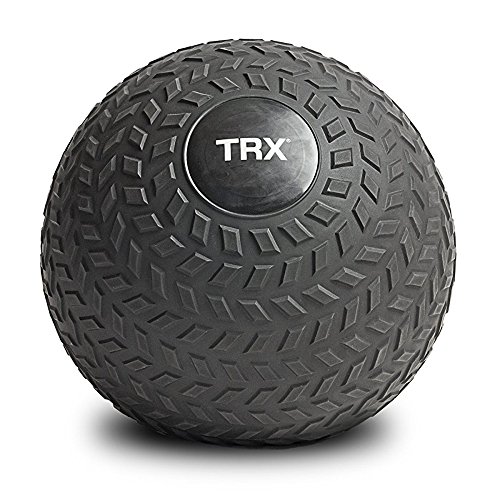
TRX built its slam ball around a heavy-duty rubber shell with a deep tire-tread pattern, and that texture is the main reason to buy it. The tread channels give your fingers real purchase on the ball, so it is easier to control during fast overhead slams, side throws, and wet-hand conditioning work where smoother balls start to slip.
The range runs from 6 pounds up to 50 pounds, sold individually, which makes it one of the widest lineups here. Lighter sizes suit speed work and beginners, while the 40 and 50 pound balls are genuinely heavy tools for strong lifters doing low-rep power work. The sand-filled core keeps the landing dead, and the rubber shell tolerates abrasive surfaces like driveway concrete better than PVC designs.
There are two downsides to weigh. The tread that makes the grip so secure also picks up dust and chalk, so the ball needs a quick wipe-down now and then. The larger sizes are also wide, which can feel awkward for smaller hands on overhead reps. If durability under daily abuse is the priority, this is the strongest shell in the roundup.
ProsourceFit Slam Medicine Ball, Classic Dead Weight Balls for Strength and Conditioning Exercises, Cardio and Core Workouts, 20lb, Black

The ProsourceFit Classic slam ball takes the simplest approach in the group: a smooth PVC shell, a sand fill, and a dead-weight feel with almost no bounce. That smoothness changes how the ball trains you. With less texture to rely on, your hands and forearms work harder to hold on during slams and tosses, which many lifters actually want from a grip-strength standpoint.
Sizes run from 5 pounds to 50 pounds, so there is a weight for youth athletes, beginners, and experienced lifters alike. The 20 pound version listed here is a sensible middle ground for conditioning circuits, wall-adjacent throws, and core work like weighted sit-ups and twists. The shell seams are sealed for slam use, and the uniform round shape makes it easy to scoop off the floor for the next rep.
The honest trade-off is grip security. On sweaty hands the smooth surface is noticeably slicker than the Yes4All grooves or the TRX tread, so high-rep slamming can feel less controlled. For lifters who prefer a clean, classic feel and train on mats, it remains a solid, straightforward choice.
Amazon Basics Heavy-Duty Slam Medicine Ball for Exercise, Weighted Design, 10lb, Black

The Amazon Basics slam ball is the low-fuss entry point for someone adding slam work to a home gym for the first time. It uses a heavy-duty PVC shell with a sand-filled core, so it absorbs impact and stays where it lands instead of bouncing away mid-circuit. The surface carries a light texture that gives a reasonable grip without the aggressive tread of the TRX ball.
The 10 pound version listed here is light, and that is exactly right for beginners, warm-up rounds, rotational throws, and higher-rep conditioning where form matters more than load. The same line is sold in heavier sizes, so it is easy to step up later. The ball wipes clean with a damp cloth, and the construction is deliberately basic.
The limits are easy to predict. The shell is thinner than the premium options, so it is better suited to indoor floors and mats than to years of slamming on bare concrete. As a first slam ball or a light conditioning tool, though, it covers the basics competently.
Titan Fitness Rubber Slam Ball, Dead Weight Ball Absorbs Impact, Minimal Bounce, Textured Surface for Strength and Conditioning, Cardio Workouts, Full Body Workout

Titan Fitness aims its rubber slam ball at lifters who train hard and heavy. The shell is thick rubber with a raised tread pattern, built to absorb repeated impact with minimal bounce, and the lineup extends into genuinely heavy territory. The 40 pound version is a good example of the line’s intent: a dense, dead ball for low-rep slams, heavy carries, and over-the-shoulder throws.
The tread texture gives a secure hold for big efforts, and the rubber construction shrugs off the kind of abuse that scuffs and thins PVC shells over time. The dead landing also suits garage gyms where a bouncing ball would be a problem.
Size is the main consideration. The heavier Titan balls are large in diameter, which suits two-handed slams but makes one-handed work and storage less convenient. The tread also holds chalk and grit, so it benefits from an occasional rinse. If your training leans toward heavy, low-rep power work, this is the pick.
How to choose
Start with weight. A slam ball should feel heavy enough to demand a full-body effort but light enough to move fast with clean form. For most adults, 15 to 25 pounds is the productive starting range for overhead slams; 30 pounds and up is best reserved for experienced lifters doing lower reps.
Next, look at the shell. PVC shells are common, lighter, and fine for mats and platforms. Rubber tread shells grip better and survive rough concrete longer. A grooved or treaded surface is noticeably easier to hold during sweaty conditioning work than a smooth ball.
Fill type is the third factor. Sand-filled balls land dead and shift slightly in your hands, which is what you want for slamming. Avoid using wall balls or bouncing medicine balls for slams, because their shells are not built for it.
Finally, think about your floor. A rubber mat or lifting platform protects both the ball and the surface, and it keeps noise down for everyone else in the house.
Who should skip
Skip a slam ball if your training space has fragile flooring, low ceilings, or close neighbors below you. Slams are loud and forceful by design, and no ball fixes that. A soft wall ball or a set of dumbbells will serve you better in an apartment.
Also skip it if your goals are purely maximal strength. Slam balls build power and conditioning, but they do not replace progressive barbell or dumbbell loading.
If you have a history of shoulder, elbow, or lower back problems, talk to a qualified professional before adding high-velocity overhead throwing movements. And if you mainly want a ball for wall ball shots or partner passing drills, buy a wall ball instead, because a dead slam ball is the wrong tool for rebound work.
FAQ
What weight slam ball should a beginner start with?
Most beginners do well with 15 or 20 pounds. That is heavy enough to make overhead slams a full-body effort while still allowing fast, clean reps. If you are smaller, returning from a layoff, or focused on rotational throws, a 10 pound ball is a reasonable starting point. You can add a heavier ball later.
Can you slam a slam ball on concrete?
Yes, but the surface matters. Treaded rubber shells like the TRX and Titan Fitness balls tolerate concrete best, while PVC shells wear faster on rough ground. Even with a durable ball, slamming on a rubber mat or platform extends the life of the shell and reduces noise. Avoid slamming directly on tile, hardwood, or cracked concrete.
What is the difference between a slam ball and a medicine ball?
A slam ball is built for impact: it has a thick shell and a sand fill that absorbs the landing, so it barely bounces. A traditional medicine ball is made for catches, throws, and core exercises, and it often has some bounce. Slamming a regular medicine ball can split its seams and send it rebounding toward you, so the two are not interchangeable.
How long does a slam ball last?
It depends on the surface, the weight, and how often you train. A quality ball used on mats a few times a week can last for years. The usual failure point is the shell or valve area wearing thin from abrasion. Rotating the ball so it does not always land on the same spot helps it last longer.
Final verdict
For most people, the Yes4All Slam Ball is the right first purchase: multiple weights, a grippy grooved shell, and a dead landing. If you slam daily or train on concrete, step up to the TRX or Titan Fitness rubber tread designs. The ProsourceFit Classic suits lifters who like a smooth, grip-demanding ball, and the Amazon Basics ball is a fine light option for beginners. Pick a weight you can move explosively, protect your floor, and the ball will earn its corner of the gym.