Key takeaways
- Compare the best BFR bands for occlusion training, with strap widths, buckle styles, pressure gauges and safe-use guidance for arms, legs and glutes.
Blood flow restriction training, usually shortened to BFR or called occlusion training, uses snug bands high on the arms or legs to slow venous blood flow during light exercise. The effect lets lifters build muscle and strength with loads far lighter than normal, which is why the method shows up in rehabilitation settings and in home gyms where heavy weights are limited or joints need a break. The bands themselves range from simple elastic straps to inflatable cuff systems with gauges. This guide compares five BFR band options on Amazon by format, width, closure style, and ease of repeatable use.
As an Amazon Associate, we earn from qualifying purchases.
Quick answer
The BFR Bands Pro set is the most versatile starting point, with 2-inch elastic straps and a quick-release buckle that works on arms and legs. Leg and glute training is better served by the wider 3-inch BFR Bands DoubleWrap set, while the Mustools 4 pack adds a pressure gauge for repeatable settings. Beginners should start light, learn the method, and keep sessions short.
BFR Bands Pro Blood Flow Restriction Bands

The BFR Bands Pro set is the design most people picture when they think of occlusion bands. Each band is an elastic strap about 2 inches wide and 2.5 millimeters thick, finished with a quick-release cam buckle that lets the wearer dial in tension and, just as importantly, release it instantly at the end of a set. The set includes two bands, enough for both arms or both legs in the same session.
The 2-inch width suits arms particularly well and works on legs for many lifters, and the elastic construction means the band moves with the muscle as it swells during a set rather than fighting it. BFR Bands, the company behind the design, built its name on this category and publishes guidance on placement and tightness for new users.
Elastic straps judge tightness by feel and by the numbers printed along the strap rather than by a measured pressure, so consistency takes a few sessions to learn. Marking the setting that felt right is a practical habit. For lifters who want the classic, proven format for both upper and lower body work, the Pro set remains the reference point in this category.
BFR Bands Blood Flow Restriction Bands, 3-Inch Wide, 2 Pack
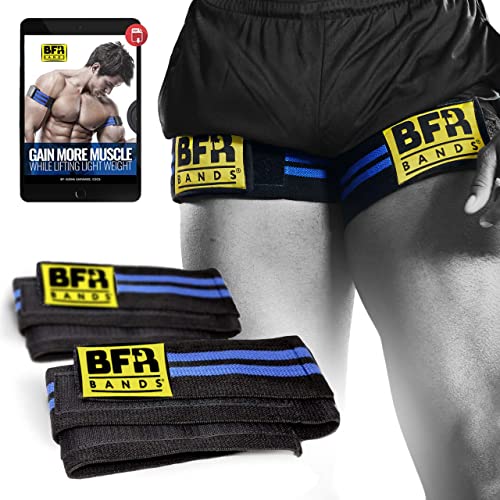
Where the Pro bands go general-purpose, this BFR Bands set goes wide. The straps measure 3 inches across, and that extra width is aimed squarely at legs, glutes, and hip work, where a wider band distributes pressure over more tissue and stays in place better through squats, leg presses, and hip thrusts. The DoubleWrap design wraps the limb twice, which helps the band hold its setting during movement.
The set includes two bands for bilateral leg training, and the construction follows the same elastic and buckle approach as the rest of the BFR Bands line, so release at the end of a set is fast. Width is the whole story here: on arms, a 3-inch band is cumbersome and can bunch at the elbow, which is why this set is best treated as the leg-day half of a BFR setup, paired with narrower bands for arm work.
Lifters whose occlusion training centers on glutes and legs, including the popular glute-focused protocols, will find this format more comfortable and more stable than forcing narrow arm bands onto thighs. It is a specialist tool, and for its specialty it is the right shape.
Mustools BFR Blood Flow Restriction Bands, 4 Pack with Pressure Gauge
The Mustools BFR set attacks the biggest weakness of elastic bands: guesswork. This four-pack includes bands for arms and legs plus a pressure gauge and pump arrangement, so tightness becomes a number that can be repeated session after session instead of a feeling that changes with fatigue and mood. For lifters following a structured protocol, that repeatability is the feature that matters most.
The set covers both upper and lower body in one purchase, with wider cuffs for the legs and narrower ones for the arms, and the gauge lets training partners match settings precisely. Inflatable-style systems also tend to feel more uniform around the limb than a single elastic strap pulled tight at one point.
The trade-offs are setup time and complexity. Pumping cuffs to a target reading takes longer than wrapping a strap, and there are more parts to keep track of in a gym bag. The brand is also a newer name than the BFR specialists in this guide. For methodical lifters, rehab-minded users, and anyone who wants documented, repeatable pressure, the gauge system justifies the extra steps.
Lisxeoc BFR Training System Blood Flow Restriction Bands

The Lisxeoc BFR Training System packages occlusion bands as a matched set for the whole body, with band configurations for the lower limbs and upper limbs sold in the same listing family. The bands follow the elastic strap format with buckle closure, sized separately for arms and legs so each limb gets an appropriate width rather than a one-size compromise.
That sizing split is the practical appeal: thigh bands that are wide enough to stay put during leg work, and arm bands slim enough to sit high on the upper arm without interfering with the elbow. The set format also keeps the total purchase simple for someone starting BFR from zero, with no need to assemble a kit from separate listings.
As a value-oriented set from a lesser-known brand, expectations should be set accordingly: check buckle function and elastic condition on arrival, and replace bands when the elastic starts to lose its snap, since consistent tension is the entire mechanism of the method. For beginners building a first complete BFR kit on a budget, the system covers the essentials in one box.
Kicosoadt Blood Flow Restriction Bands and Booty Bands Bundle

The Kicosoadt bundle pairs BFR bands with fabric resistance bands in a package aimed at glute and hip training. The occlusion bands handle the restriction side of leg sessions, while the fabric booty bands add conventional resistance work for hip abduction, glute bridges, and squat warm-ups, so the two halves of a glute-focused session come from a single purchase.
Fabric resistance bands are the comfortable kind that do not roll or pinch the way thin latex loops can, and they hold up well to repeated use. The BFR bands in the bundle follow the same leg-focused brief, sized and styled for thigh placement during squats, thrusts, and lunges.
This is a themed bundle rather than a full-body BFR system: arm training is not its purpose, and lifters building a complete occlusion setup for every limb should look at the BFR Bands Pro or the Mustools gauge set instead. For the large audience training glutes at home with light equipment, though, the bundle matches the workout it is designed for and keeps the gear list short.
How to choose
Decide first which limbs the training will target. Arm work needs bands around 2 inches wide that sit high on the upper arm; leg and glute work is more comfortable and stable with bands 3 inches wide or dedicated leg cuffs. A complete setup for both usually means two widths, whether bought as a system or as separate sets.
Next, choose a pressure method. Elastic straps with buckles are fast and portable, and numbered markings help repeat a setting; gauge-based cuff systems cost more time per set but give a documented, repeatable pressure. Closure speed matters for safety and comfort, so favor designs that release in one motion. Finally, treat the learning curve seriously: start with very light loads, keep early sessions short, and read the guidance that comes with the bands before the first workout.
Who should skip
BFR training is not for everyone, and some people should skip it outright. Anyone with a history of blood clots, circulation problems, varicose veins, heart conditions, or uncontrolled blood pressure should not use occlusion bands without explicit medical clearance, and the same caution applies during pregnancy. Lifters who already train heavy without joint complaints gain the least from the method, since its main advantage is making light loads productive. Beginners who have not yet learned basic exercise form should also wait, because BFR amplifies fatigue quickly and form breaks down fast under it.
Frequently Asked Questions
How tight should BFR bands be?
Tight enough to feel snug and mildly restrictive, never painful, numb, or sharp. A common guideline is a perceived tightness around seven out of ten on the legs and slightly less on the arms, with the limbs keeping their normal color and no tingling. If numbness, pins and needles, or unusual discoloration appears, the bands come off immediately. Gauge-based systems replace the guesswork with a repeatable reading, which many users prefer.
What weights should be used with BFR bands?
Light ones. Occlusion training is normally performed with roughly 20 to 40 percent of the load that would be used for the same exercise without bands, moved for high repetitions with short rests. If the load feels heavy in the normal sense, it is too heavy for the method. The burn and fatigue arrive quickly by design, and chasing heavy weight defeats the joint-friendly purpose of the technique.
How long should bands stay on during a workout?
Only for the exercise block they are being used with, and they should be removed during longer rests. A common pattern keeps total time under restriction near 15 to 20 minutes per limb in a session, broken into individual exercises with the bands released between movements. Leaving bands on while doing unrelated parts of a workout is a misuse of the method and adds discomfort without benefit.
Can BFR bands be used for rehabilitation?
They are widely used in physical therapy settings for rebuilding muscle when heavy loading is not yet safe, which is one reason the method became popular. That said, rehabilitation use belongs under professional supervision, with the therapist setting placement, pressure, and exercise selection. A home user recovering from injury should treat BFR as part of a guided program rather than a self-directed shortcut back to training.
Final verdict
For a first BFR purchase, the BFR Bands Pro set covers arms and legs in the classic elastic format, and the 3-inch DoubleWrap set joins it when leg and glute work is the focus. The Mustools gauge system suits lifters who want repeatable, documented pressure, the Lisxeoc system bundles a full kit for beginners, and the Kicosoadt bundle serves glute-focused home training. Whichever set is chosen, start light, learn the tightness scale, and let the method do the work.