Key takeaways
- Compare the best yoga mats for grip, cushioning and durability, from Manduka and Liforme to thick budget picks for daily home and studio practice.
- Top Pick: Manduka PRO Yoga Mat
- Runner-up: Liforme Original Yoga Mat
- Also consider: JadeYoga Harmony Yoga Mat
A good yoga mat does three jobs at once: it keeps hands and feet from sliding, cushions knees and elbows on hard floors, and stays flat and stable through standing balances. The tricky part is that grip, cushion and stability pull in different directions. Very thick foam feels kind on joints but can wobble in tree pose, while thin rubber grips beautifully yet offers little padding on concrete or tile.
This guide compares five well-known mats across those trade-offs, from a dense studio mat built to last for years to a thick budget mat for gentle home practice. Each pick suits a different style, floor type and routine, so the best choice depends less on brand and more on how and where the mat will actually be used.
As an Amazon Associate, we earn from qualifying purchases.
Quick answer
For most people, the Manduka PRO Yoga Mat is the safest long-term pick: its dense 6mm cushioning protects joints without feeling spongy, and the closed-cell surface resists sweat and odor. Yogis who prioritize maximum grip and alignment guidance should look at the Liforme Original, while anyone with sensitive knees on a tight budget will be happier with the thick Gaiam Essentials mat.
Manduka PRO Yoga Mat

The Manduka PRO is a 6mm mat made from PVC with a closed-cell surface, sized at 71 by 26 inches in its standard length, with a longer 85-inch version also listed. That density is the defining feature. Instead of sinking into soft foam, the body rests on a firm, supportive layer that stays stable in standing poses and does not compress to nothing under a knee in low lunge. The closed-cell construction means sweat sits on top rather than soaking in, so the surface wipes clean easily and resists odor buildup over time.
Grip is good once the mat is broken in, though a brand-new PRO can feel slightly slick at first, a known quirk that a salt scrub or regular use usually resolves. The trade-offs are weight and portability. At roughly seven and a half pounds for the standard size, this is a mat that lives at home or in one studio rather than traveling to classes across town. It also sits at the premium end of the category. For a daily practitioner who wants one mat for years of use, that cost and weight buy genuine durability. For occasional use, lighter and simpler options below make more sense.
Liforme Original Yoga Mat

The Liforme Original is a 4.2mm mat built around two ideas: grip and alignment. Its eco-polyurethane surface is bonded to a natural rubber base, a combination that delivers strong traction both dry and damp, which is why it is a common choice for heated and power styles where palms tend to slide in downward dog. Etched into the surface is the AlignForMe system, a set of markers at the center and edges that give visual references for hand and foot placement without needing a teacher to correct every pose.
At 72.8 by 26.8 inches, it is longer and wider than a standard mat, giving taller practitioners more room, and it ships with a carry bag included. The materials are PVC-free and designed to biodegrade in landfill conditions over time, which matters to buyers avoiding conventional plastic mats. The honest trade-offs are cushion and care. At 4.2mm, sensitive knees may want a towel or blanket for long kneeling sequences on hard floors, and the grippy top layer needs gentle cleaning to protect the surface. It is a premium mat aimed at committed practitioners who value alignment feedback and dependable grip over plush padding.
JadeYoga Harmony Yoga Mat
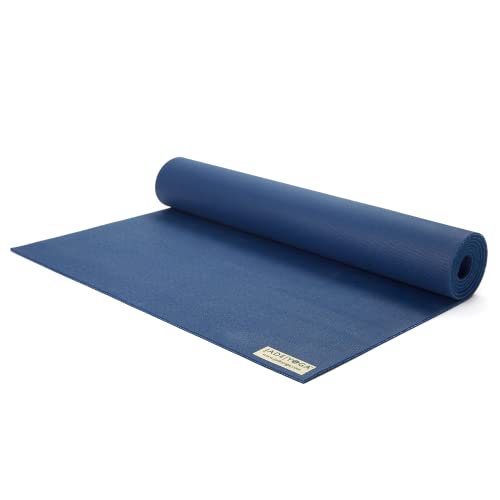
The JadeYoga Harmony is made from natural rubber tapped from rubber trees, with an open-cell surface that produces the kind of grip rubber is known for. At about 3/16 of an inch thick, roughly 4.8mm, it balances floor feel and cushion: thin enough to feel grounded in balances, padded enough for most floor work. It comes in 68-inch and 74-inch lengths at 24 inches wide, and the company plants a tree for every mat sold, with production based in the United States.
Natural rubber brings real trade-offs. The open-cell texture that makes it grippy also absorbs sweat and needs regular cleaning, and it should be stored out of direct sunlight, which degrades rubber over time. There is a noticeable rubber smell when new that fades with airing. People with latex sensitivities should avoid natural rubber mats entirely and choose a PVC or TPE option instead. Weight is moderate, around five pounds depending on size, so it travels to class more easily than the Manduka PRO. For practitioners who want a plant-based material, excellent traction and a mat that feels connected to the floor rather than floating on foam, the Harmony remains one of the most respected choices in its class.
Gaiam Essentials Thick Yoga Mat
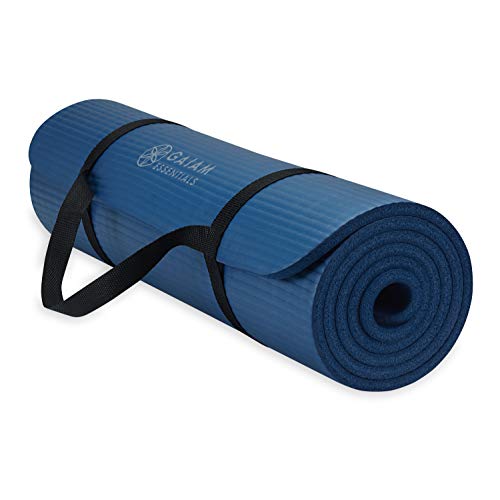
The Gaiam Essentials Thick Yoga Mat is a 10mm, or 2/5-inch, foam mat measuring 72 by 24 inches, and it is built for comfort first. That extra thickness makes a genuine difference for anyone whose knees, elbows or hip bones protest on thinner mats, and it suits gentle yoga, stretching, Pilates and floor exercise better than fast flowing sequences. A textured surface helps limit sliding during basic poses, and an easy-cinch carrying strap is included, which makes it simple to store rolled in a corner or carry to a class.
The trade-off for all that cushion is stability. Thick, softer foam compresses unevenly, so demanding balances and strong standing work feel less secure than on a dense 5mm or 6mm mat, and the material will show wear sooner than premium rubber or PVC under daily heavy use. It is also a wider, bulkier roll to store. None of that matters much for its intended audience. For beginners, older practitioners, or anyone returning to exercise who needs joint-friendly padding at an accessible cost, this is a sensible, forgiving place to start, with the option to upgrade to a denser mat later if practice becomes more athletic.
Amazon Basics Extra Thick Exercise Yoga Mat

The Amazon Basics Extra Thick Exercise Yoga Mat is a half-inch, roughly 12.7mm, foam mat sized at 74 by 24 inches, with a textured surface and an elastic carrying strap included. The extra length suits taller users, and the deep cushioning works well for floor-based routines: gentle yoga, stretching, core work and mobility sessions on hard surfaces where comfort matters more than precision balance work. It is lightweight for its size, easy to roll, and simple to wipe down after use.
As with other thick foam mats, the compromises are firmness and long-term resilience. The soft surface can feel unstable in standing balances, foam this thick can compress permanently in high-pressure spots over time, and grip in sweaty, fast-paced practice is limited compared with rubber. It is best understood as a general exercise mat that handles yoga comfortably rather than a specialist yoga surface. For a spare mat, a home workout corner, stretching routines or a first mat for a beginner who is not yet sure yoga will stick, it covers the basics at a modest cost and leaves room to upgrade later.
How to choose
Start with thickness. Mats between 4mm and 6mm suit most yoga styles, giving cushion without wobble. Thicker foam, 10mm and up, favors gentle practice and sensitive joints, while very thin mats favor travel and floor feel. Next, match material to priorities. Natural rubber grips best and feels grounded but needs care and is unsuitable for latex sensitivities. PVC, as in the Manduka PRO, is the durability leader with a closed-cell, easy-clean surface. Eco-polyurethane over rubber, as in the Liforme, maximizes grip when damp. Foam is the lightest and softest, and the least stable.
Check dimensions against body size. Standard mats run 68 to 72 inches long and 24 inches wide; taller or broader practitioners should look for 74 inches or more and extra width. Consider where practice happens. A heavy mat is fine for a permanent home spot and a burden for a long walk to a studio. Finally, think about sweat. Hot and power styles reward grippy, moisture-friendly surfaces, while restorative practice rewards pure cushion. Choosing by routine first, rather than by brand, leads to a mat that actually gets used.
Who should skip
Anyone looking for a mat purely for high-intensity workouts, heavy dumbbell work or shoes-on training should skip yoga mats entirely and look at large interlocking gym tiles or a dedicated equipment mat, which handle impact and footwear far better. People with latex allergies should skip natural rubber options such as the JadeYoga Harmony and choose PVC, TPE or foam instead. Travelers who fly often should skip full-weight studio mats and consider a thin travel mat that folds into luggage. And anyone expecting a thick foam mat to fix balance problems should reconsider: cushion hides instability rather than solving it, so a firmer 5mm mat is usually the better training tool.
FAQ
How thick should a yoga mat be for bad knees?
A mat between 6mm and 10mm usually works best for sensitive knees, because it pads the joint without turning standing poses into a balancing act on foam. Dense 6mm mats protect while staying stable. Very thick foam adds comfort for floor work but can feel wobbly, so pairing a mid-thickness mat with a folded blanket under the knees is often the smartest compromise.
Which yoga mat material grips best when sweaty?
Natural rubber and eco-polyurethane surfaces generally grip best as moisture increases, which is why rubber mats and the Liforme Original are popular for heated practice. Closed-cell PVC grips well once broken in but can feel slick when brand new. Foam mats are the weakest option for sweaty flows, since their soft surface offers less traction and absorbs less reliably.
How long does a good yoga mat last?
A dense PVC mat such as the Manduka PRO is built to last many years of daily practice, while natural rubber typically shows wear sooner because its open-cell surface breaks down with sun, sweat and time. Foam mats compress fastest. Lifespan depends on frequency of use, storage away from sunlight, and regular cleaning, but material choice is the biggest factor in how long a mat stays supportive.
Can a yoga mat be used for general exercise?
Yes, with limits. Yoga mats handle stretching, core work, Pilates and bodyweight exercise comfortably. They are not designed for shoes, dropped weights or heavy equipment, which tear and compress the surface. Thick foam exercise mats cover floor routines well, while anyone adding weights or footwear should choose a dedicated gym mat or flooring tiles built for that kind of load and abrasion.
Final verdict
Match the mat to the practice. The Manduka PRO is the buy-once choice for daily practitioners who want dense support and a surface that stays hygienic for years. The Liforme Original earns its place for grip and alignment in stronger, sweatier flows. The JadeYoga Harmony suits those who prefer natural rubber and a grounded feel. The Gaiam Essentials and Amazon Basics mats serve beginners and comfort-first users well at modest cost. Any of the five will outperform a worn-out studio rental; the right one is the one that fits the floor, joints and routine it will meet every day.