Key takeaways
- Compare the best weightlifting gloves for grip, palm protection and wrist support, with leather and ventilated picks for training at home or the gym.
Weightlifting gloves solve two problems at once: they shield your palms from the friction and pressure that tear skin during heavy pulling work, and they improve your hold on knurled bars when sweat starts to build. The right pair also softens the pressure of dumbbell handles during pressing, which keeps calluses from becoming the reason a set ends early.
This guide compares five gloves that cover the main styles lifters actually use: traditional padded leather, leather with an integrated wrist wrap, ventilated designs with full palm coverage, and lightweight microfiber pairs that double as general gym gloves. The differences that matter most are palm material, wrist support, finger length, and how well a glove handles heat.
As an Amazon Associate, we earn from qualifying purchases.
Quick answer
The Harbinger Pro Wristwrap is the best all-around pick for most lifters because it pairs a vented, cushioned leather palm with an integrated wrap that steadies the wrist on heavy presses and pulls. Lifters who train in hot gyms or prefer maximum bar feel should look at the ventilated ihuan and lightweight Atercel options instead.
Harbinger Power Non-Wristwrap Workout Weightlifting Gloves with StretchBack Mesh and Leather Palm

The Harbinger Power Non-Wristwrap is the long-running entry point into leather lifting gloves. Its palm is genuine leather with foam padding over the pressure points, which gives a firm, confidence-inspiring feel on deadlifts, rows, and pull-up bars without the bulk of a thick gel pad. The back of the hand uses Harbinger’s StretchBack performance mesh, a flexible panel that moves with the hand and lets heat escape during longer sessions.
The half-finger design leaves fingertips exposed for a closer connection to the bar and easier use of chalk between sets. Because this model has no wrist wrap, the wrist sits low and unobtrusive, which suits lifters who dislike extra material around the joint or who wear a watch while training.
The trade-offs follow from that simplicity. There is no added wrist support for heavy pressing, and leather needs a little break-in time before it softens and molds to the hand. Leather also asks for basic care: air it out after sessions and keep it away from soaking washes. For lifters who want a durable, traditional glove for general strength work, this remains a dependable starting point.
Harbinger Pro Wristwrap Weightlifting Gloves with Vented Cushioned Leather Palm
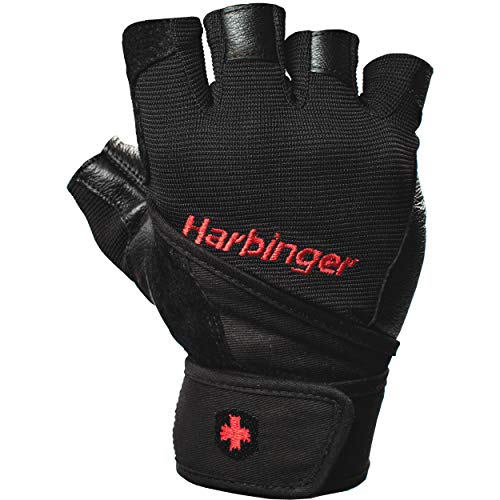
The Harbinger Pro Wristwrap builds on the same leather-glove formula and adds the feature heavy lifters ask for most: an integrated wrist wrap that tightens around the joint for extra stability. The palm is vented, cushioned leather, so it keeps the durable grip surface of the Power model while adding perforations that help the hand breathe. StretchBack mesh across the back keeps the glove flexible through a full range of motion.
The wrap adjusts with a hook-and-loop closure, letting the wearer dial in light support for general training or a firmer brace for bench press, overhead work, and heavy dumbbell rows. Anatomical padding follows the natural shape of the palm, which reduces bunching when the hand closes around a bar.
Trade-offs are mostly about bulk and heat. The wrap adds material around the wrist, which some lifters find warm during long, high-rep sessions, and the glove takes up more room in a gym bag than minimalist pairs. The leather palm needs the same airing-out routine as any leather glove. For lifters whose wrists ache under load, though, the added support makes this the most complete glove in this roundup.
ihuan Ventilated Weight Lifting Gym Workout Gloves with Wrist Wrap Support for Men & Women, Full Palm Protection, for Weightlifting, Training, Fitness, Hanging, Pull ups

The ihuan Ventilated Weight Lifting Gloves take the opposite approach to leather: a lightweight synthetic build designed around airflow and full palm protection. The back of the hand is heavily ventilated, and the palm pairs cushioning foam with a silicone grip pattern that helps the glove hold onto smooth dumbbell handles and machine grips where leather can feel slick.
An adjustable wrist wrap is built in, giving moderate support that can be snugged down for pressing or loosened for mobility work. The full palm coverage extends protection across the whole hand rather than concentrating it in pads, which appeals to lifters who develop calluses in several spots. Pull-off tabs on the fingers make removal easier after a sweaty session, and a soft thumb panel doubles as a sweat wipe.
The trade-offs are durability and feel. Synthetic palms generally wear faster than leather under daily heavy barbell work, and the thicker cushioning slightly dulls bar feel on deadlifts. Sizing also runs snug, so careful measuring against the size chart matters. For lifters who train in warm spaces, do a lot of machine and dumbbell work, or simply dislike leather, this is a practical, comfortable alternative.
Atercel Workout Gloves for Men and Women, Exercise Gloves for Weight Lifting, Cycling, Gym, Training, Breathable and Snug fit
The Atercel Workout Gloves are a lightweight, breathable option aimed at lifters who want palm protection without a heavy, structured glove. The palm uses foam padding with a silicone grip surface, and the back is a breathable mesh-style fabric that keeps the glove feeling light through high-rep circuits, kettlebell work, and general gym sessions. The fit is deliberately snug, which keeps the material from shifting mid-set.
These gloves skip the wrist wrap entirely, so the wrist stays free and cool, and the low-profile design works as well for cycling and rowing machines as it does for free weights. Finger pull tabs help peel the gloves off after training, and the materials dry faster than leather, which makes them easy to toss in a gym bag without much thought.
The compromises are support and long-term toughness. There is no wrist bracing for maximal pressing, and the lighter palm padding offers less cushioning under very heavy dumbbells than the leather options above. Lifters who deadlift heavy several times a week may wear through the palm sooner than they would with leather. As a versatile glove for mixed training, however, the Atercel covers a lot of ground.
ihuan New Weight Lifting Gym Workout Gloves Men & Women
The ihuan New Weight Lifting Gym Workout Gloves are the brand’s updated take on its ventilated design, aimed at lifters who want full palm protection with a softer, more cushioned feel. The palm combines foam padding with a textured grip layer, and the construction covers the entire palm so pressure from dumbbell handles and pull-up bars is spread out rather than concentrated on a few pads.
Breathable fabric across the back of the hand and between the fingers helps manage heat, and the adjustable wrist strap adds light support that can be tightened for pressing movements. Like the other ihuan model here, it includes pull-off tabs for easy removal and a thumb panel that works for wiping sweat mid-workout.
Where it differs from the Ventilated model is emphasis: this version leans toward cushioning and coverage, which makes it a good match for lifters whose main complaint is sore palms and torn calluses rather than grip slippage. The extra padding slightly reduces bar feel, and synthetic materials will not outlast a well-kept leather glove. Lifters who prioritize comfort across long, varied sessions will find this the most forgiving synthetic option in the group.
How to choose
Start with palm material. Leather palms, like the two Harbinger models, last longest under heavy barbell work and mold to the hand over time, but they need airing out and gentle care. Synthetic palms are lighter, dry faster, and usually cost less, though they wear sooner under daily deadlifts.
Next, decide on wrist support. An integrated wrap helps when wrists bend back under heavy presses or ache during pushing movements. If your training is mostly pulling, machines, and lighter dumbbells, a wrap-free glove feels cooler and less restrictive.
Finger length matters more than it seems. Half-finger gloves keep fingertips free for chalk and a closer feel on the bar. Longer coverage protects more skin but can bunch on some lifts.
Finally, check fit and grip. Gloves should be snug without cutting circulation, and a silicone or textured palm helps on smooth handles. Measure your hand against the brand’s size chart rather than guessing, because sizing varies widely between leather and synthetic models. If you train in a hot garage or a crowded gym, weight ventilation heavily; a glove that traps heat often ends up left in the bag.
Who should skip
Skip gloves altogether if your main goal is maximum deadlift grip strength, because bare hands and chalk build the strongest hold, and gloves add a thin layer that slightly increases bar diameter. Competitive powerlifters should also train bare-handed, since most federations do not allow gloves on the platform. Lifters with very small hands may find padded gloves make thick handles harder to grip. In those cases, consider lifting straps for heavy pulling, liquid chalk where gyms allow it, or simple callus care with a pumice stone instead.
FAQ
Do weightlifting gloves weaken grip strength?
Gloves can slightly reduce maximum grip demand because the palm material adds friction and a small amount of thickness, so grip may not develop quite as fast as barehanded training. For most lifters the difference is minor, and protecting skin keeps training consistent. A good compromise is using gloves for high-rep accessory work and going bare-handed with chalk for top deadlift sets.
How should weightlifting gloves fit?
A lifting glove should fit snugly enough that the palm material does not slide or bunch when you close your hand, but not so tight that fingers tingle or seams dig in. Leather gloves start slightly stiff and relax with use, while synthetic gloves feel closer to their final fit immediately. Measure around the knuckles and follow the brand’s chart.
How do I stop lifting gloves from smelling?
Turn gloves inside out after training and let them air dry completely before storing them, since trapped sweat causes most odor. Leather pairs should not be machine washed; wipe them with a damp cloth and mild soap instead. Synthetic gloves usually tolerate a gentle cold wash. Keeping a second pair in rotation also helps, because gloves that fully dry between sessions stay fresher.
Are glove wrist wraps enough for wrist pain?
The wraps built into lifting gloves give light to moderate support and can reduce discomfort during pressing, but they are not a treatment for injury. Persistent wrist pain deserves rest and, if it continues, a professional evaluation. For heavier support, a dedicated pair of stiff wrist wraps offers more bracing than any glove-integrated wrap, at the cost of extra bulk and setup time.
Final verdict
For most lifters, the Harbinger Pro Wristwrap is the glove to buy first: durable leather, real wrist support, and enough ventilation for everyday training. The Harbinger Power Non-Wristwrap suits traditionalists who want leather without the wrap. Synthetic fans should choose between the grip-focused ihuan Ventilated, the comfort-focused ihuan New, and the featherweight Atercel for mixed training. Match the glove to your main lifts, measure your hand carefully, and any of these five will protect your palms without getting in the way.