Key takeaways
- Compare the best gym flooring for home gyms, from foam puzzle tiles to heavy rubber rolls, with thickness, coverage and floor protection guidance.
- Top Pick: ProsourceFit Puzzle Exercise Mat, 1/2 Inch
- Runner-up: BalanceFrom Puzzle Exercise Mat, 3/4 Inch
- Also consider: We Sell Mats Multipurpose EVA Foam Tiles, 3/8 Inch
Gym flooring is the quiet foundation of a home gym: it protects the floor underneath from dropped weights and machine feet, steadies racks and benches, absorbs noise, and gives training a defined, grippy surface. The category splits into three families. Foam puzzle tiles are light, cheap, and ideal for bodyweight and machine areas. Rubber rolls are the heavy-duty answer for lifting zones and deadlift platforms. Individual rubber mats sit between the two. This guide compares five proven options on Amazon across those families, with attention to thickness, coverage, and what each surface can realistically handle.
As an Amazon Associate, we earn from qualifying purchases.
Quick answer
For general home gym use, the ProsourceFit Puzzle Exercise Mat tiles are the easiest place to start: inexpensive EVA foam that installs in minutes. Rooms with heavy free weights should step up to rubber, where the IncStores rubber rolls handle dropped dumbbells and deadlifts. The BalanceFrom tiles add cushion for floor work, We Sell Mats covers big areas cheaply, and Rubber-Cal rolls suit cut-to-fit spaces.
ProsourceFit Puzzle Exercise Mat, 1/2 Inch
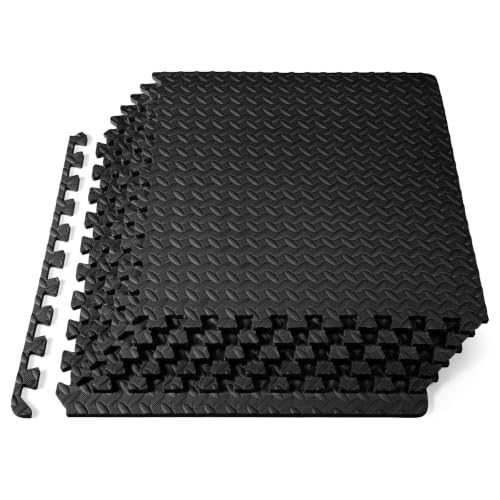
The ProsourceFit Puzzle Exercise Mat is the default recommendation for foam gym flooring, and the specification explains why. Each tile measures 24 by 24 inches at a half inch thick, and the six-tile pack covers 24 square feet with detachable end borders included for clean edges. The EVA foam has a textured surface on both sides, which helps the tiles grip the subfloor and gives shoes and bare feet traction during training.
Installation is genuinely simple: tiles press together by hand, trim with a utility knife at walls, and lift individually if one gets damaged. The foam cushions knees and elbows during floor work, supports exercise machines and benches, and takes the edge off noise from lighter equipment.
The limits are the limits of all EVA foam. Heavy racks can leave permanent dents, and dropped dumbbells will chew the surface over time, so this flooring belongs under bodyweight training, yoga, stretching, and machine areas rather than a deadlift station. Within that role it is hard to beat: coverage expands one pack at a time, colors include black and gray, and the same tiles double as playroom or workshop padding when the gym layout changes.
BalanceFrom Puzzle Exercise Mat, 3/4 Inch

BalanceFrom takes the same interlocking tile format and adds thickness. At three-quarters of an inch, these EVA foam tiles carry noticeably more cushion than standard half-inch tiles, which matters for floor exercise, martial arts practice, gymnastics work, and any training that puts knees, hips, and elbows on the ground repeatedly.
The pack includes six 24 by 24 inch tiles covering 24 square feet, plus end borders for a finished perimeter. The foam is high-density for a consumer tile, so it springs back better after equipment is moved, and the textured surface keeps feet planted during dynamic work. BalanceFrom sells the line in several thicknesses and coverage sizes, which makes it easy to match the tile to the room.
Thicker foam is still foam: it softens impact rather than stopping it, and heavy barbell work belongs on rubber. The extra cushion can also feel slightly unstable under a heavy squat rack compared with thinner, denser surfaces. For multipurpose rooms where floor work, stretching, and moderate equipment share the space, the added padding is worth it, and this is the tile to choose when comfort is the priority.
We Sell Mats Multipurpose EVA Foam Tiles, 3/8 Inch

We Sell Mats built its name on covering large areas affordably, and these multipurpose tiles show how. At three-eighths of an inch thick, they are the thinnest pick in this guide, which keeps cost per square foot low and makes them easy to cut, carry, and store. The 24 by 24 inch tiles interlock with the familiar puzzle edge and come in a wide range of colors, a detail that matters for playrooms, classrooms, trade show booths, and home gyms that share space with the rest of the house.
The thinner profile suits them to light duty: stretching zones, under-machine padding, kids areas, and walking surfaces where the goal is separation from a cold or hard floor rather than impact absorption. They also work as a base layer under a dedicated lifting platform.
They are not the choice for dropped weights or heavy rack feet, and the manufacturer is upfront that foam tiles are designed around bodyweight exercise. Buyers who understand that brief get a lot of coverage for the money, with the flexibility to expand room by room and replace single tiles as they wear.
IncStores Heavy Duty Gym Flooring Rubber Rolls, 3/8 Inch
When the training involves heavy iron, rubber replaces foam, and the IncStores rubber rolls are the serious home gym option. These rolls are made from recycled rubber at three-eighths of an inch thick, a density and weight class that foam cannot approach. Rubber in this thickness absorbs dropped dumbbells, deadens deadlift impact, and gives squat racks and benches a stable, non-slip footing that does not dent or wander.
Rolls arrive four feet wide in several lengths, so a lifting zone can be covered with few seams, and the material trims with a sharp utility knife and straightedge. The speckled finish hides chalk dust and wear well, and the surface sweeps and mops clean.
The trade-offs are weight, cost, and odor. Rubber rolls are heavy to position, cost more per square foot than any foam tile, and new recycled rubber carries a smell that takes days of ventilation to fade. Installation is a two-person job in most rooms. For a garage gym built around barbell training, none of that outweighs the protection: this is the flooring that keeps concrete intact under years of heavy lifting.
Rubber-Cal Recycled Rubber Flooring Roll, 1/4 Inch

Rubber-Cal approaches rubber flooring as a cut-to-length material. The recycled rubber rolls are four feet wide and sold in many lengths at a quarter inch thick, so a buyer can cover a long narrow lifting strip, a treadmill lane, or a full basement gym with minimal waste. The quarter-inch profile keeps the rolls manageable to move and position while still providing real rubber protection against scuffs, dropped hand weights, and machine feet.
Recycled rubber brings the usual benefits: strong grip even when dusty, good sound dampening compared with bare concrete or foam, and a surface that tolerates garage temperature swings. Rubber-Cal sells the same material in several thicknesses, so heavier lifting zones can step up within the same product family.
At a quarter inch, this roll is a protective surface rather than a drop zone: repeated heavy deadlift drops belong on thicker rubber or a built platform. New rolls also carry the characteristic recycled rubber odor at first. For lifters who need exact coverage, durable material, and a cleaner look than interlocking tiles, the cut-to-length format is the practical advantage here.
How to choose
Match the material to the load first. Foam tiles serve bodyweight work, stretching, and machine areas; rubber serves free weights and anything that gets dropped. Thickness follows the same logic: three-eighths to a half inch of foam for comfort, three-quarters for floor work, and at least three-eighths of an inch of rubber under heavy lifting, ideally over a platform for deadlifts.
Measure the room and buy coverage with a margin for cuts and mistakes, remembering that tiles cover in four-square-foot units and rolls in four-foot widths. Consider the subfloor too: foam over carpet compresses unevenly, while rubber lies flat almost anywhere. Finally, plan for odor and off-gassing with any new foam or recycled rubber by ventilating the room for the first days after installation.
Who should skip
Dedicated Olympic lifters who drop maximal cleans and snatches should skip flat flooring entirely and build a proper lifting platform with plywood and stall mats instead. Renters who cannot risk odor complaints or adhesive residue should stick to loose foam tiles that lift out cleanly. Anyone training only with suspension straps or bodyweight in a small corner may find a single exercise mat does the job, making a full flooring purchase unnecessary.
Frequently Asked Questions
Is foam or rubber flooring better for a home gym?
Rubber is better wherever weights are involved: it is denser, resists dents from rack feet, and survives dropped dumbbells that would tear foam. Foam tiles win on price, comfort, and easy installation, and they are the right choice for bodyweight training, yoga, stretching, and under cardio machines. Many home gyms combine both, rubber in the lifting zone and foam everywhere else.
How thick should gym flooring be?
For foam, a half inch is the standard for general use and three-quarters adds comfort for floor work. For rubber under heavy lifting, three-eighths of an inch is the practical minimum, and deadlift areas benefit from a platform that adds plywood layers beneath the rubber. Thickness alone is not protection, though: density and material matter as much as the number on the box.
Can gym flooring go over carpet?
Foam tiles over carpet usually disappoint, because the carpet compresses unevenly and the tiles separate and shift during training. Low-pile carpet under heavy rubber rolls fares better, since the weight of the rubber holds everything in place, but the surface will never feel as solid as flooring laid on concrete, wood, or tile. Hard subfloors give the best result for both materials.
How is gym flooring cleaned and maintained?
Foam tiles wipe down with a damp cloth and mild soap, and individual tiles can be lifted out for deeper cleaning or replacement. Rubber rolls and mats sweep clean and tolerate mopping with a neutral cleaner; avoid harsh solvents that dry the rubber out. Giving new flooring a few days of ventilation before training reduces the initial odor from both foam and recycled rubber.
Final verdict
Most home gyms should start with foam tiles for general training space, and the ProsourceFit and BalanceFrom tiles cover comfort and value between them, while We Sell Mats stretches a budget across big rooms. The moment heavy barbells enter the picture, rubber takes over: IncStores rolls for serious lifting zones, Rubber-Cal for exact cut-to-length coverage. Measure honestly, match the material to the heaviest thing that will hit it, and the floor will outlast the equipment on top of it.